Table of Contents
 Contec Cleanroom
 Life Sciences, Microelectronics, Biotechnology, Medical Devices, Pharmaceutical, Contamination Control, Article
How Should Cleanroom Floor Surfaces Be Mopped?
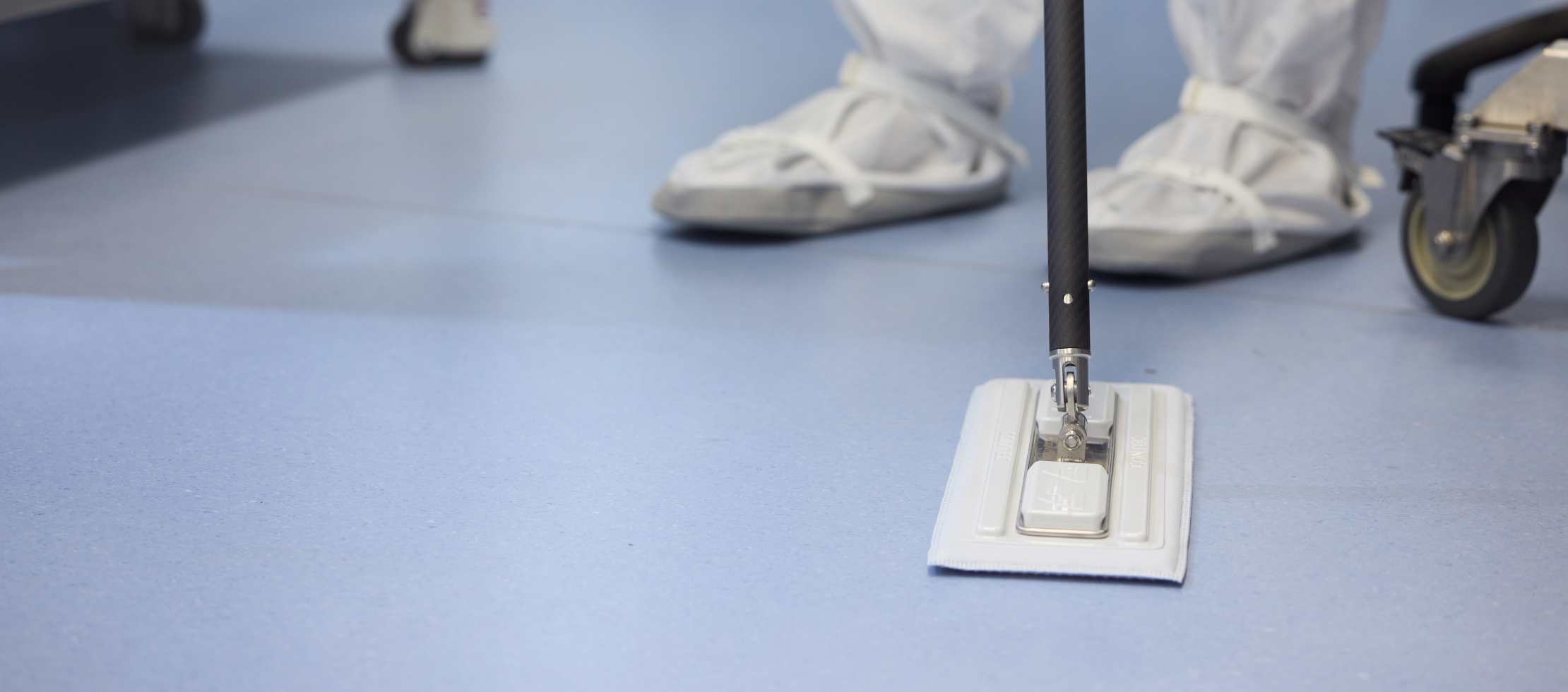
Effective mopping in cleanroom environments requires consistent surface coverage, proper bucket management, and validation to ensure that contaminants are removed without reintroducing particles or residues. This article explains how to optimize floor cleaning to maintain contamination control and compliance in controlled environments.
What Are the Challenges of Mopping Cleanroom Floors?
Mopping cleanroom floor surfaces is not as simple as sweeping or wiping. Floors in controlled environments can be large, continuously in use, and may have high traffic. Improper technique, insufficient coverage, or contaminated buckets can spread dirt instead of removing it. Effective cleaning requires planned strategies for consistent coverage and contamination prevention.
What Is the Importance of Coverage in Mopping?
Coverage refers to how thoroughly the mop surface contacts and cleans the entire floor area. Inconsistent or partial coverage can leave contaminants behind or spread them unevenly.
The single most important factor in determining mop coverage is the contamination load (type and quantity of contaminants) on the floor to be cleaned. Such contaminants can be viable or nonviable in nature, and the concern over them depends on the nature of the processes contained within the rooms being cleaned. The contamination load also directly influences many other fundamental choices such as cleaning protocols, cleaning frequency, and the materials and solutions used.
This contamination load depends on many factors such as:
- Operations and processes within the room
- Materials brought into the room and how they are handled once inside
- Number of operators in the room
- Gowning requirements and operators’ adherence to correct gowning and behavior protocols
- Maintenance activities and the behavior of maintenance personnel while in the room
- Other ancillary contamination control measures such as tacky mats, contaminant source control, cleanroom access control, cart protocols, etc.
- Overall cleanroom condition
Additionally, there are other variables that also affect mop coverage, including:
- The type and condition of the flooring surface itself
- The frequency of floor cleaning, and the thoroughness with which it is done
- Frequency of change of cleaning materials (tacky roller covers currently) - most cleaning materials (tacky rollers included) typically are not changed until well after they no longer are removing contaminants
Best practices include dividing the floor into sections and using overlapping passes to ensure complete coverage. Mopping should follow a pattern and be repeated systematically to cover every area.
How Should Mopping Buckets Be Managed?
Mopping buckets are critical tools in floor cleaning, and they must be managed to prevent contamination.
Key considerations for maintaining mopping buckets include:
- Using clean water and changing it regularly during the process
- Keeping buckets closed where feasible to reduce airborne contamination
- Ensuring the bucket interior is cleaned and dried between uses
- Avoiding cross-contamination when handling dirty rinse water
When using a two-bucket mopping system, protocol will provide significant immediate and long term benefits, including:
- Significantly cleaner floors, with no dingy appearance
- More consistent and reliable environmental control, including control of microorganisms, resulting in less risk to product quality
- More effective mopping for the time spent to clean the floors
- More effective cleaning and disinfectant solutions that are not depleted so quickly
- Cleaning solutions will be cleaner, longer, resulting in less solution used over time
- Longer life for mopping equipment
The addition of a third bucket to provide a dedicated mop rinse solution (either water or a dilute solution of disinfectant) extends all of the benefits of the two-bucket protocol. Three bucket protocol is considered an industry best practice as it minimizes the disinfectant solution from being contaminated and reduces the risk of reapplying contaminants.
Proper bucket handling supports consistent cleaning performance and prevents dirty water from being redeployed onto the floor surface.
Why Is Validation Important in Mopping Practices?
Validation demonstrates that a cleaning process consistently achieves the intended level of cleanliness. In controlled environments, mopping must be validated to show that it removes contaminants without introducing new risk. Validation also helps define appropriate coverage, frequency, tools, and bucket management procedures that work in the specific facility context.
How Do You Validate Mopping Coverage and Technique?
Mopping validation involves establishing documented methods for routine cleaning and verifying that these methods produce consistent contamination control results.
Mopping validation documentation may include:
- Defining mop coverage patterns and sequence
- Measuring outcomes such as residue or particulate levels post-cleaning
- Confirming bucket handling practices
- Demonstrating repeatability across multiple cleaning cycles
Validation ensures that cleaning protocols are effective, defensible, and aligned with the facility’s contamination control strategy.
Conclusion
Mopping cleanroom floor surfaces effectively requires strategic coverage, careful bucket management, and documented validation. Following validated methods helps maintain contamination control, supports regulatory compliance, and ensures that floors are cleaned without redistributing dirt or particles.
Key Takeaways
- Consistent floor coverage is essential for cleanroom mopping effectiveness.
- Mopping buckets must be handled and maintained to prevent contamination.
- Validation ensures that cleaning practices achieve consistent contamination control.
- Documented methods with defined patterns and verification support performance.
- Regular review and repeatability are critical for effective cleanroom floor cleaning.
 return to overview
 back to top