Process Equipment Residues vs. Environmental Residues
A key distinction is made between:
- Process equipment residues – found on internal surfaces such as tanks and product-contact areas.
- Environmental residues – found on floors, walls, ceilings, work surfaces, and equipment exteriors.
While both involve chemical residues, they are governed by different cleaning approaches, regulatory expectations, and risk considerations.
In pharmaceutical environments, residue discussions often default to process equipment, but environmental residues require equal attention.
Clean-in-Place (CIP) vs. Environmental Cleaning
Clean-in-Place (CIP)
- Automated, closed systems
- Designed to prevent product cross-contamination
- Focused on internal equipment surfaces
- Uses validated chemical cycles
Environmental Cleaning
- Manual process
- Uses disinfectants and sometimes detergents
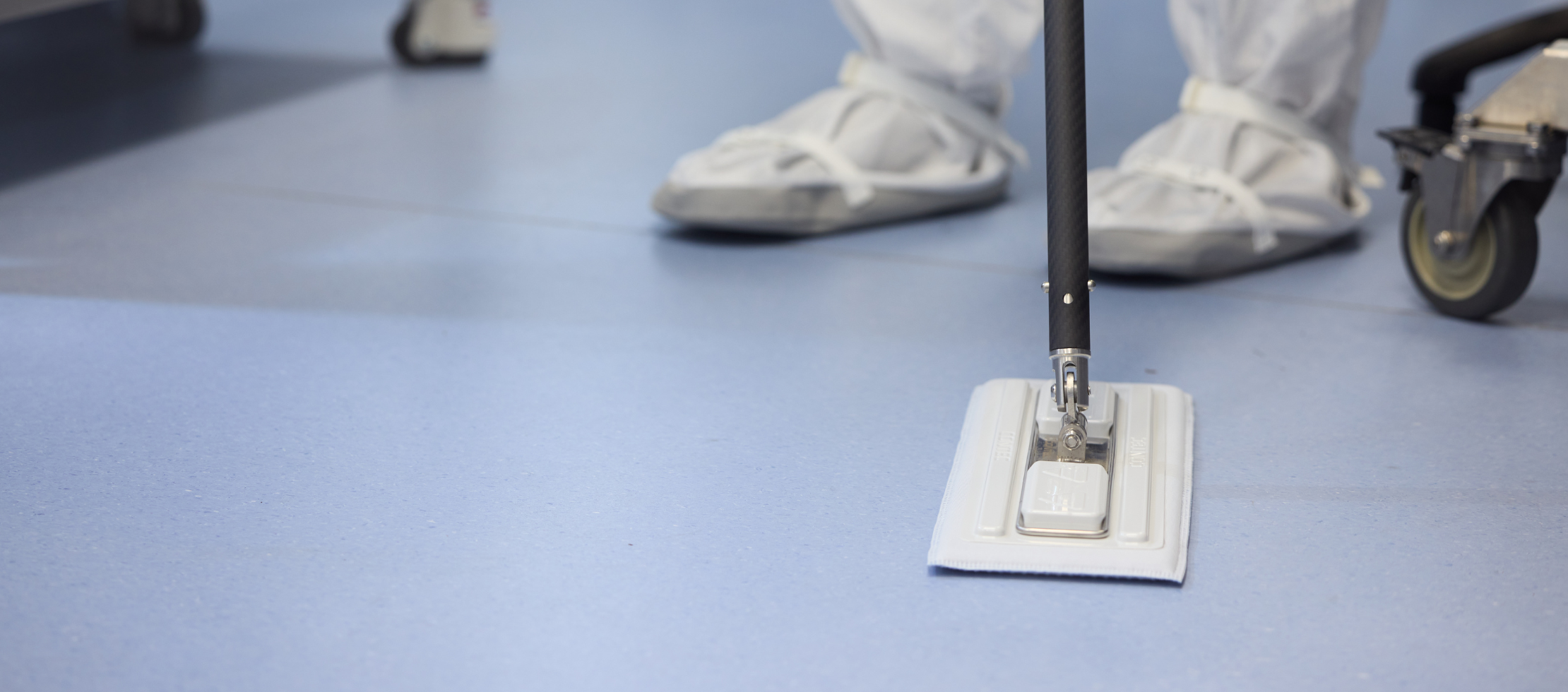
- Targets external surfaces
- Focused on maintaining a controlled cleanroom environment
Environmental cleaning does not follow the same automated validation structure as CIP, making residue control more dependent on SOPs and execution discipline.
Types of Environmental Residues
Environmental residues may originate from:
- Disinfectants
- Detergents
- Process-related contamination
- Environmental deposition
Disinfectant residues are particularly important because they are applied routinely and repeatedly, increasing the potential for accumulation over time.
Concerns Associated with Environmental Residues
Residue buildup creates several concerns:
- Surface discoloration or staining
- Slippery floors
- Corrosion or surface degradation
- Reduced aesthetic perception of cleanliness
- Potential interference with disinfection effectiveness
Unlike process residues, which are closely monitored and validated, environmental residues often accumulate gradually and go unnoticed.
How Disinfectant Application Contributes to Residue Formation
Repeated application of disinfectants—especially without periodic removal—leads to residue accumulation.
Residue formation correlates with:
- Frequency of disinfectant use
- Type of chemistry applied
- Surface material
- Environmental conditions
Disinfectant residues are not inherently problematic in small amounts, but layering over time increases risk and visibility.
Surface Impact and Accumulation Patterns
Environmental surfaces such as floors, walls, ceilings, and workstations are subject to repeated application.
Because environmental cleaning is manual, variability in technique can also influence:
- Evenness of application
- Drying patterns
- Residue streaking
- Areas of heavy buildup
Residues may adhere differently depending on the surface composition and finish.
Regulatory and Operational Implications
Residues on environmental surfaces may:
- Indicate inadequate cleaning control
- Raise regulatory concerns
- Suggest poor contamination control discipline
- Impact inspection outcomes
Even when microbial and particle counts are within limits, visible residue may signal a lack of environmental control.
Residue control supports the broader contamination control strategy required in modern GMP environments.
Managing Residues as Part of Contamination Control
Environmental residue management should be integrated into contamination control programs.
Contamination control programs with integrated environmental residue management includes:
- Understanding disinfectant chemistry
- Differentiating between equipment and environmental cleaning
- Establishing removal procedures
- Training operators
- Monitoring surfaces visually
Residue management is not separate from contamination control—it is a component of it.
 Contec Cleanroom
 Life Sciences, Biotechnology, Medical Devices, Pharmaceutical, Contamination Control, Webinar




 return to overview
 back to top