Table of Contents
 Contec Cleanroom
 Life Sciences, Microelectronics, Biotechnology, Medical Devices, Pharmaceutical, Cleaning & Disinfection, Article
What Details Make the Difference for Successful Disinfection?
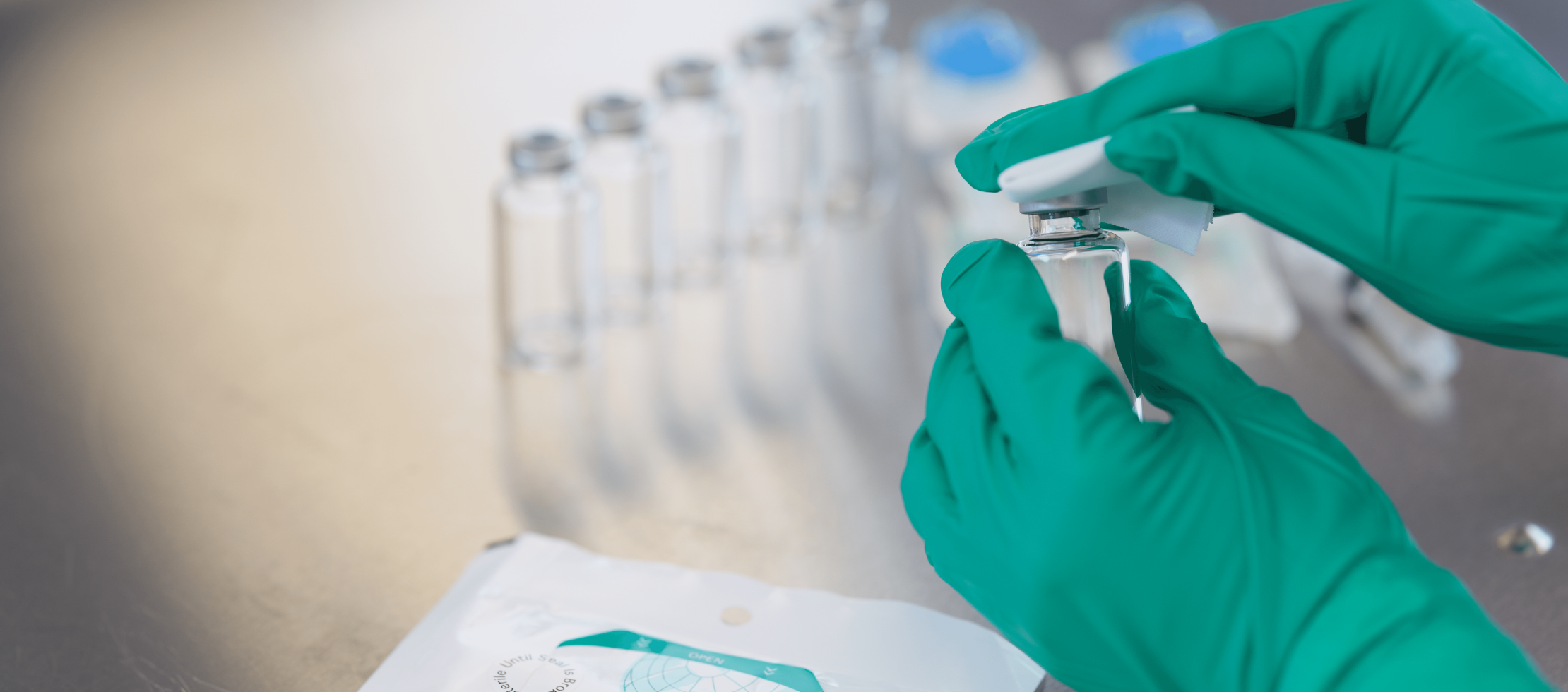
Successful disinfection in controlled environments depends on more than just choosing a product. It requires attention to the disinfectant’s chemistry, application technique, appropriate contact time, compatibility with surfaces, and deliberate program validation. Each detail influences whether disinfection achieves the desired microbial reduction.
What Is Successful Disinfection?
Successful disinfection not only reduces microbial load but ensures that surfaces are left in a condition that supports contamination control objectives. The objective is to reduce microorganisms to an acceptable level appropriate for the specific risk and surface type while minimizing residues that could compromise future cleaning or monitoring.
How Does Product Selection Influence Disinfection?
Selecting the right disinfectant product is foundational. Effectiveness varies by active ingredient and formulation — no single disinfectant is optimal in all situations.
Facilities should consider:
- microbial spectrum
- surface compatibility
- residue potential
- operator safety
Why Is Disinfection Technique Critical?
Disinfection technique directly impacts outcomes. The way a disinfectant is applied — wiping, spraying, or using presaturated wipes — influences how well it contacts and penetrates surface contaminants.
Disinfection should be treated as three processes:
- Cleaning or removal of the “soil load” from surfaces
- Application of the disinfectant solution with proper contact time
- Removal of any residues remaining from the disinfection process
Proper technique ensures coverage and reduction of microorganisms while avoiding re-distributing contaminants.
What Is the Role of Contact Time in Disinfection?
Contact time — the period a disinfectant remains wet on the surface — is essential for microbial reduction. Each product has a recommended contact time based on its formulation and intended use. If a surface dries before the contact time elapses, the disinfectant may not achieve its full efficacy.
Adhering to labeled contact times helps ensure that microbial reduction matches expectations from product performance data.
How Do Surface Compatibility and Residues Affect Outcomes?
Surfaces vary in material type, texture, and sensitivity to chemicals. A disinfectant that is incompatible with a surface can damage it or leave residues that compromise cleanliness and monitoring.
Residues left by disinfectants should be considered in product selection and cleaning program design, as they can affect future disinfection efficacy and environmental monitoring results.
Why Is Program Validation Important?
Validation ensures that disinfection practices consistently meet performance expectations. Validation activities help facilities confirm that their disinfectant choice, application technique, contact time, and overall process deliver the intended microbial reduction. It also provides documented evidence for quality systems and contamination control strategies.
Conclusion
Successful disinfection requires attention to product selection, proper application technique, adherence to contact time, surface compatibility, and validated processes. Each detail influences whether disinfection supports contamination control goals in the long term.
Key Takeaways
- Successful disinfection depends on more than product choice — technique and contact time are essential.
- Disinfectant selection should consider surface compatibility and residue potential.
- Applying disinfectants correctly ensures coverage and efficacy.
- Contact time must be respected to achieve expected microbial reduction.
- Validation confirms that disinfection practices consistently achieve desired outcomes.
References
- IEST-RP-CC004: Evaluating Wiping Materials Used in Cleanrooms and Other Controlled Environments Aug 2004 Institute of Environmental Sciences and Technology
- D. MacDougall and C Morris, Infection Control Today, Vol 10 (June 2006)
- V. Williamson, Infection Control Today, Vol 11 No 8 (Aug 2007)
- R. Bloss, S Meyer, G. Kampf, Journal of Hospital Infection, Vol 75 (Nov 2010)
- K. Rossington, Cleanroom Technology, The International Journal of Contamination Control, (June 2013)
 return to overview
 back to top