Table of Contents
 David P. Nobile
 Life Sciences, Microelectronics, Biotechnology, Medical Devices, Pharmaceutical, Cleaning & Disinfection, Article
Why Is There No Such Thing as an ISO Class 5 Wipe?
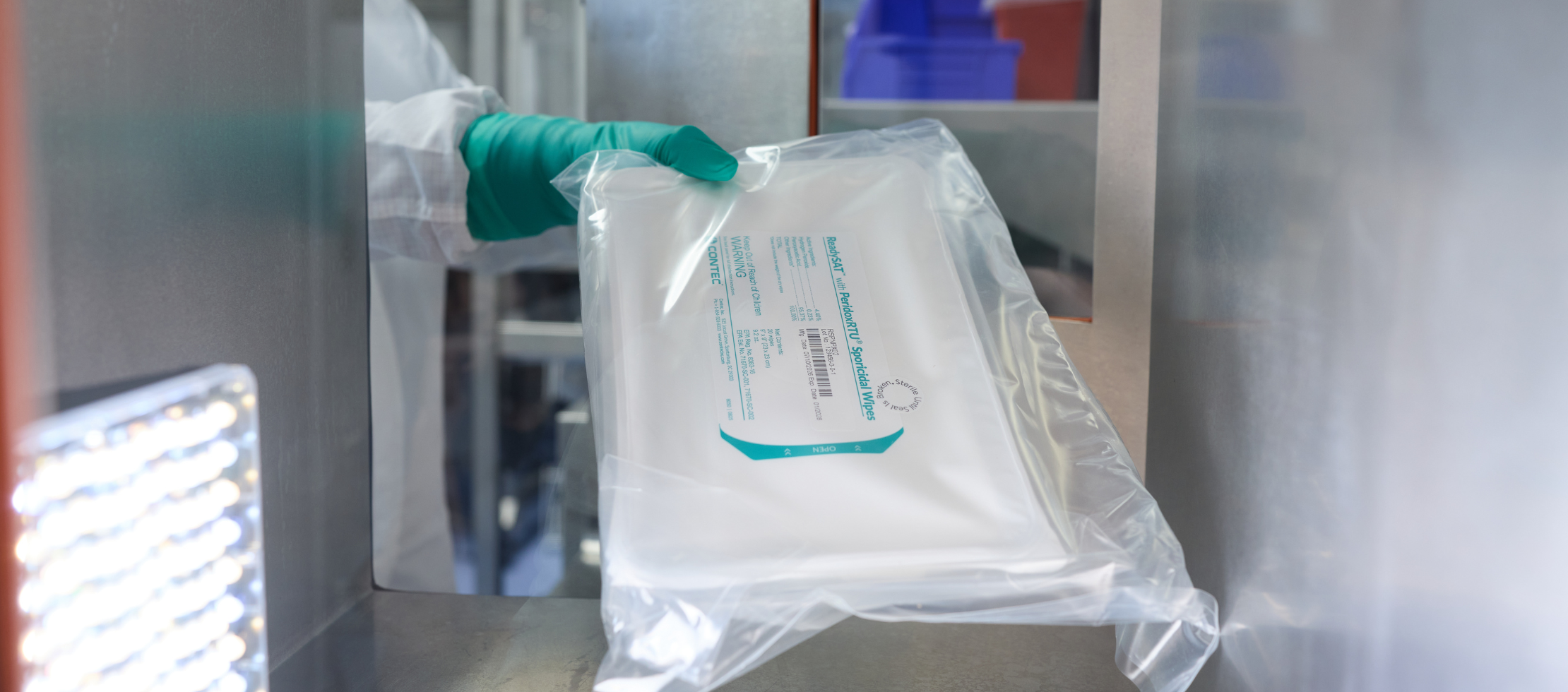
The classification of cleanroom cleanliness, begun at the dawn of the existence of cleanrooms in the early 1970’s with Fed-Std-209, is concerned with the cleanliness of the air inside the cleanroom. In this original format, the classification number (e.g. Class 100, Class 1,000 etc.) refers to the number of particles, larger than 0.5 micrometers, per cubic foot of air in the room.
As controlled environments became cleaner over the years, and as the use of cleanrooms extended to other countries worldwide, the scope of specifications for cleanrooms became international, and the nomenclature adapted accordingly. So today we have remnants of several older nomenclatures still sometimes used, and the current ISO standard nomenclature. As a result, Class 100, Class M3.5, and ISO Class 5 all refer to the same level of environment cleanliness.
How then does this relate to suitability or certification of a wipe (or glove, or gown, or face mask, or any other consumable material) for a particular cleanroom environment?
The short and factual answer is: it doesn’t.
There is no such thing as an “ISO Class 5 wipe” because ISO 14644 standards classify cleanroom air cleanliness levels, not consumable products like wipes. While wipes may be suitable for use in ISO Class 5 environments, the ISO classification applies to the controlled space—not the wipe itself.
What Does ISO 14644 Actually Classify?
ISO 14644 is the international standard that defines cleanroom classifications based on airborne particulate concentration. These classifications (e.g., ISO Class 5) refer specifically to the number and size of airborne particles allowed per cubic meter of air within a controlled environment.
The standard does not apply to products, materials, or consumables used inside the cleanroom. It defines environmental performance—not product certification.
Why Can’t a Wipe Be ISO Class 5?
A wipe cannot be labeled “ISO Class 5” because ISO classification is determined by air cleanliness levels within a controlled space. Consumables such as wipes are not certified under ISO 14644.
Marketing language may sometimes imply a wipe is “ISO Class 5,” but technically, this is incorrect. Wipes can only be described as suitable for use in ISO Class 5 environments, not classified as such themselves.
What Determines If a Wipe Is Suitable for ISO Class 5 Cleanrooms?
Suitability depends on the wipe’s performance characteristics, including:
-
Low particle generation
-
Low extractables and nonvolatile residue
-
Minimal fiber shedding
-
Compatibility with disinfectants and solvents
-
Clean manufacturing and packaging processes
The wipe must support maintaining the environmental classification rather than compromising it.
How Are Wipes Tested for Cleanroom Use?
Wipes are evaluated through various standardized test methods to assess their cleanliness and performance.
Testing may include:
-
Particle release testing
-
Nonvolatile residue (NVR) testing
-
Extractables analysis
-
Sorbency testing
-
Fiber and particle shedding evaluation
These tests help determine whether a wipe is appropriate for use in controlled environments, including ISO Class 5 cleanrooms.
What Should You Look for When Selecting a Cleanroom Wipe?
When selecting wipes for critical environments, facilities should consider:
-
Cleanliness level required
-
Application type (dry wiping, solvent application, disinfectant use)
-
Surface compatibility
-
Residue contribution
-
Documentation and validation data
Rather than focusing on misleading terminology, users should evaluate objective performance data.
Conclusion
ISO Class 5 is a classification of cleanroom air—not of wipes. While wipes can be designed and tested to perform in ISO Class 5 environments, the ISO designation itself applies strictly to the cleanroom environment.
Proper wipe selection should be based on performance data and suitability, not terminology.
Key Takeaways
- ISO 14644 classifies cleanroom air cleanliness—not wipes.
- The term “ISO Class 5 wipe” is technically incorrect.
- Wipes can be suitable for ISO Class 5 environments based on performance data.
- Objective testing (particle release, NVR, extractables) determines suitability.
- Proper wipe selection supports maintaining cleanroom classification.
 return to overview
 back to top